Personal AI is remaking search results. Here’s the danger to your business
Here is an example. A woman with a wheat allergy finishes a long day, opens her phone at 7 p.m. and asks for a good restaurant nearby. Her AI remembers the allergy, so it skips the pizza place everyone loves and points her to the Thai kitchen two blocks away that marks its gluten-free dishes. That isn’t science fiction: OpenAI says that when memory is on, ChatGPT may use saved memories when it rewrites a search, and its memory guide names dietary preferences as the kind of detail that can refine a restaurant search.
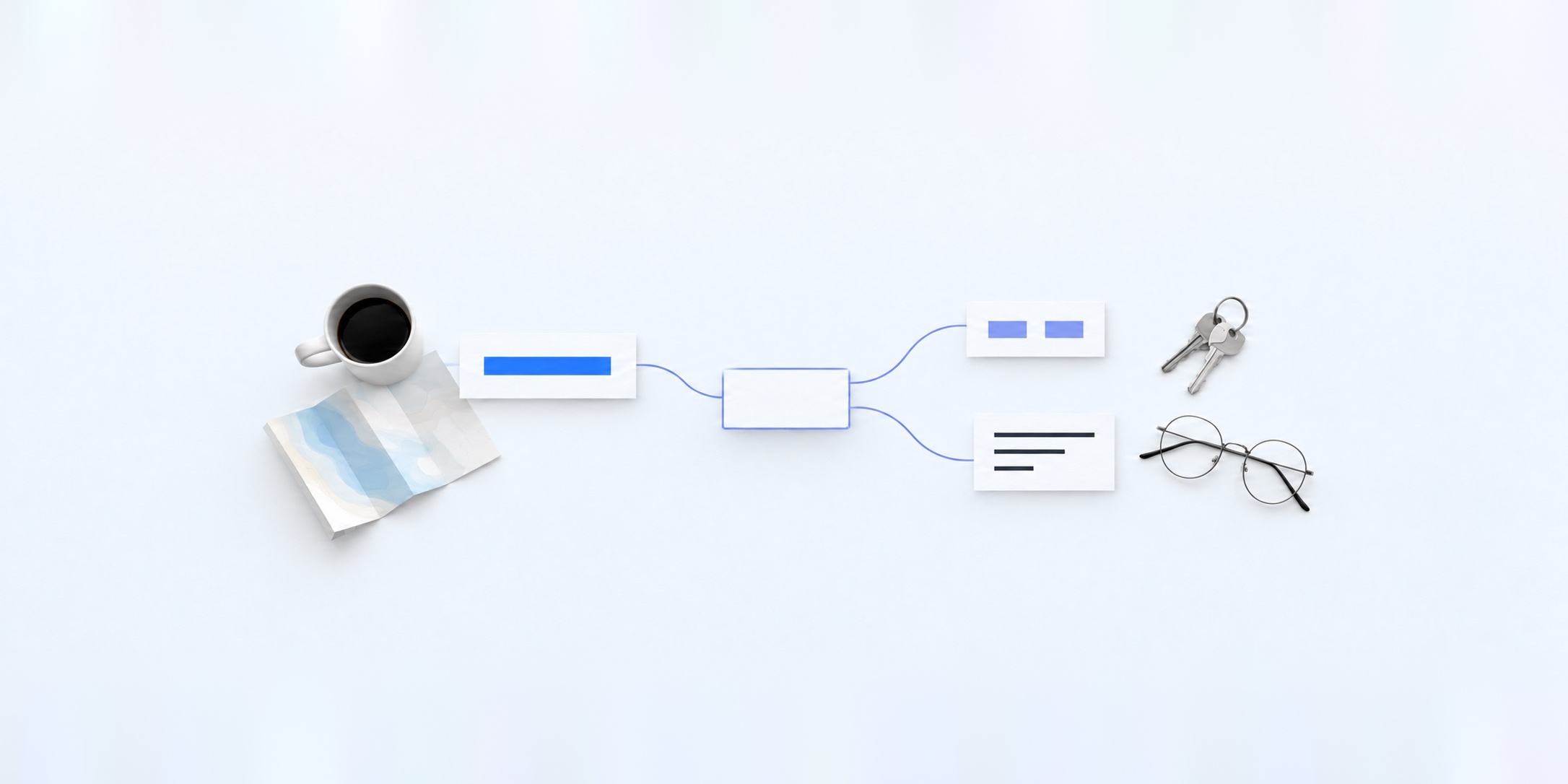
Notice what happened. She typed a short question. Her AI searched for a longer, more personal one. Search used to look up what you typed: “best real estate agent,” “divorce lawyer,” “AC repair.” Now the AI can first rewrite the question with what it knows about you, then go search for that.
So here is my argument. Your customer’s AI isn’t searching for “best real estate agent” anymore. It’s searching for the version of that question that matches their life. Generic results are ending, so generic marketing is too.
The AI rewrites the question before it searches
Here is what that can look like. These are illustrations, not logged searches:
- The restaurant. They type “good restaurant near me.” Their AI may search for “restaurants nearby with clearly marked gluten-free dishes, open after 7 p.m.”
- The home sale. They type “best real estate agent.” Their AI may search for “real estate agent experienced with waterfront homes near $1 million, for a seller in their 60s who is downsizing.”
- The plumber. They type “plumber near me.” Their AI may search for “plumber who replaces old galvanized pipes in 1960s homes and lets you book online.”
The companies describe the pieces themselves. OpenAI says ChatGPT “may use relevant saved memories when rewriting a search query.” Google’s guidance for site owners says AI Overviews and AI Mode may use a “query fan-out” technique, “issuing multiple related searches across subtopics and data sources” to develop a response. And Google’s Personal Intelligence lets AI Mode draw on a person’s connected Gmail and Photos. In May, Google opened it to nearly 200 countries and territories without a subscription.
Put those together and the search your customer’s AI runs may look nothing like the one you are tracking.
Every customer’s AI knows something different, and it’s growing
Think about what your phone sees in a year: your email, your photos, your calendar, the things you search for at 2 a.m. I’d argue that for a lot of people, their AI now knows more about their health, money and plans than their closest friends do, and sometimes more than their partner. No two customers have the same memory, history or connected apps behind their questions.
And it’s intensifying. In September OpenAI launched dots, which it calls always-on agents. In October Anthropic opened a waitlist for Claude Duet, “a new app where Claude works as a proactive agent.” In May Google introduced Gemini Spark, “a 24/7 personal AI agent that helps you navigate your digital life.” My bet is these assistants will keep getting better at guessing what each person needs before they finish asking. This context is opt-in, and Google itself warns its version “might not always get personalization right and can make mistakes.”
Your rank report tracks a question your customers’ AI no longer asks
A rank screenshot captures one generic question, asked once. Even generic answers barely hold still. In a SparkToro study, 600 volunteers ran 12 different prompts through ChatGPT, Claude and Google’s AI a combined 2,961 times. SparkToro found “a <1 in 100 chance that ChatGPT or Google’s AI, if asked 100X, will give you the same list,” and “more like 1 in 1,000 runs before you’d see two lists in the same order.” Volunteers were asked to “keep their usual settings (whether those were personalized or default).” The study’s author, SparkToro co-founder Rand Fishkin, discloses that he joined Gumshoe.ai, an AI tracking startup.
So “#1 in ChatGPT” isn’t a ranking. It’s a leaderboard that changes for every person, every time.
Here is the part I think matters most. On a clean account with no history and no memory, you might come up first a hundred times in a row. Then a real customer asks, with years of email, photos and saved preferences behind the question, and you never show up at all. Not because you’re bad at the job. Because there isn’t enough specific, public information about you for the AI to recommend you to that person with confidence.
Generic marketing stops working when results stop being generic
For years, local marketing has been a contest over the word “best”: more reviews, more pages with your town’s name, more directory listings. Some of that still matters. But the best plumber for a landlord with twelve units is not the best plumber for a retiree in a 1950s house with old pipes. A page that shouts “#1 plumber in town” gives a rewritten question nothing to match.
What works now is a tailored, pointed approach: showing your business in the best light for the specific customers you serve.
A made-up example. Picture a homeowner in their late 60s. They own a waterfront home worth close to $1 million, and they’re comfortable with technology. Their AI could already know a lot: the property tax bill in their inbox, the dock in their photos, the flights they keep booking to see family in another state. When they ask who should sell their house, the AI is really looking for an agent who matches all of that. To recommend one with confidence, it has to find:
- Waterfront sales the agent has handled, with the towns named.
- Experience with sellers who are downsizing or moving closer to family.
- How the agent handles inspections on older docks and seawalls, and who they bring in.
- The towns and shorelines they actually serve, by name.
- Proof anyone can check: recent sales, reviews that describe these situations, licenses.
If that information is public and specific, the AI has something real to say about you. If it isn’t, the AI says nothing.
The same idea works for any local business:
- A lawyer: an estate lawyer who explains how they handle second marriages and stepchildren, in which counties, and what a first meeting costs.
- A plumber: a plumber who says plainly that they replace old galvanized pipes in 1960s homes, names the neighborhoods, and shows finished jobs.
- An HVAC company: a heating and cooling company that explains which systems work in older homes without ductwork, and whether it handles the rebate paperwork.
A rank screenshot is the wrong thing to pay for
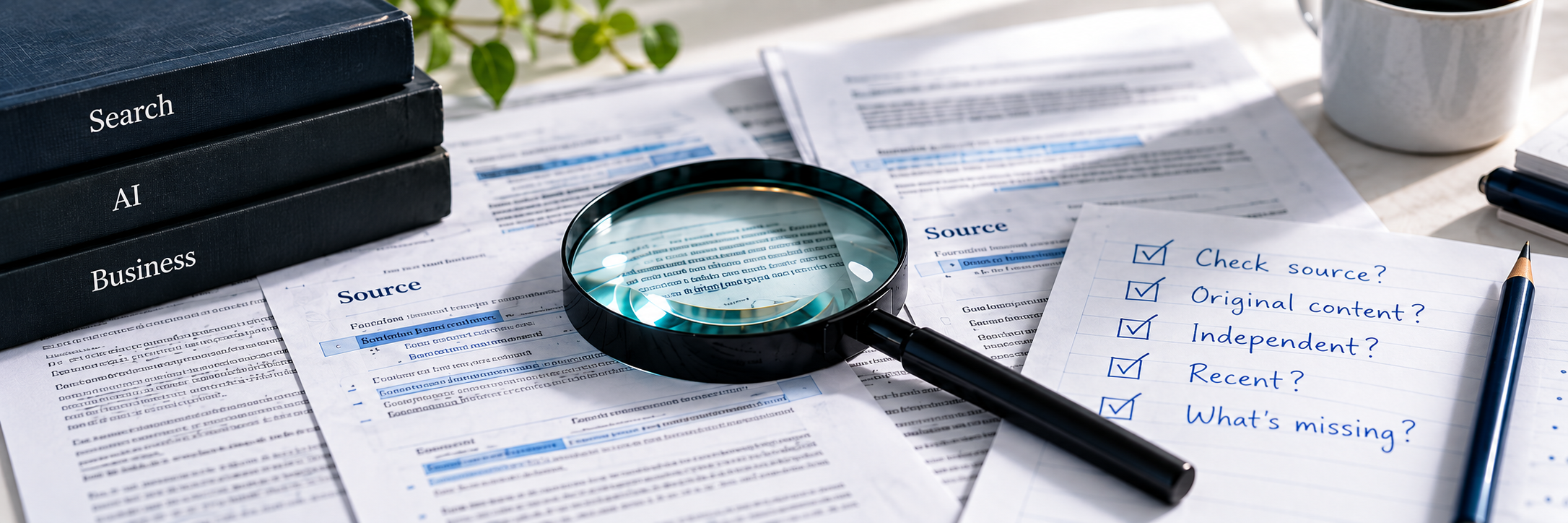
The way in is more information about you, written for the specific situations you serve, with proof beside every claim. That is real work, and it’s what good AI SEO help can do well. If you hire AI SEO help, ask for these, not a rank screenshot:
- A list of the situations you serve best, in your customers’ own words, each with its own page. “Selling a waterfront home to move closer to family” is a situation. “Real estate services” is not.
- Proof next to every claim: named towns, real numbers, credentials, and reviews that describe the situation.
- Tests that ask the specific question, the long, personal version a real customer’s AI would search for, run with memory on and off and on different days.
- A plain record of what AI says when it does mention you: whether it can explain why you, and what it gets wrong or leaves out.
Your customer’s AI is asking a specific question. Make sure you’re the specific answer.
Sources
- Google, Personal Intelligence in AI Mode in Search, Jan 22, 2026
- Google, A new era for AI Search, May 19, 2026
- Google, The Gemini app becomes more agentic, delivering proactive, 24/7 help, May 19, 2026
- Google Search Help, Connect your Google content apps to get a Search services experience that’s tailored to you, undated, checked Oct 29, 2026
- Google Search Central, AI features and your website, undated, checked Oct 29, 2026
- OpenAI, Searching the web with ChatGPT, undated, checked Oct 29, 2026
- OpenAI, Memory FAQ, undated, checked Oct 29, 2026
- OpenAI, Introducing dots, Sep 29, 2026
- Anthropic, Introducing Claude Duet, Oct 21, 2026
- SparkToro, NEW Research: AIs are highly inconsistent when recommending brands or products; marketers should take care when tracking AI visibility, Jan 27, 2026

Oliver Helgemo
Oliver Helgemo studies how AI and search decide which businesses to recommend. For the last four years he has studied what drives consumer decisions across real estate, business-to-business sales, search engine optimization and AI adoption, and he now works with local businesses on how they show up in AI answers.
More from OliverSpot an error? See how we handle corrections.