
Five-star reviews aren't enough anymore, and not every AI reads Google
When you ask an assistant to recommend a real estate agent, who do you think checked the reviews it used? It sounds like a nitpicky question, but it matters a lot more now, because a review isn't just sitting on a business profile waiting for somebody to scroll past it anymore. Software reads the whole pile, boils it down into a summary, and can put a business in front of someone who never even opened the review site.
Here's something we see on a daily basis: real reviews from real clients, often older ones without active Google accounts, get pulled as spam. Getting them back means contacting Google support and filing report after report to prove the reviewer is a real person and it was a real business transaction. These are honest reviews from real customers, and they still disappear.
That's why I don't love the usual advice to just go get more reviews. More real reviews are good, I'm not arguing with that, but the platform still decides which ones stay up, an AI may shrink whatever's left into a couple of lines, and a lot of these assistants aren't even reading Google in the first place. Five stars on Google used to feel like the finish line. It's just not enough anymore.
AI needs detail from reviews
Here's the thing about "they did a great job." Everyone does a great job.
If you want a business to survive today, it pretty much has to have five-star Google reviews, which means the stars stopped telling anybody much of anything a while ago. What AI needs is detail: what you do, what you do differently, why you do it that way and how well it actually works. That's the proof it needs before it recommends you, and if your reviews aren't saying any of that, it's going to be incredibly hard to increase your AI visibility, especially with Gemini.
Why Gemini? Well, Google's own Gemini Apps help page says Gemini uses public Google Maps information for places, ratings, addresses and opening hours, and Google says Ask Maps can answer detailed questions about a place using information from more than 300 million places and reviews from more than 500 million contributors. Think about what a detailed question needs. If somebody asks for an agent who's patient with first-time buyers and your reviews just say "great experience, highly recommend," there's nothing in there for the AI to connect to that question.
Our research often shows Local Guide reviews showing up in the Gemini overview on a Google Business Profile, and they definitely help.
Reviews are now being summarized
This didn't start with Gemini. Amazon introduced AI-generated review highlights back in 2023, then Google Maps added Gemini review summaries and conversational questions about places in 2024, and a couple of months later Yelp announced Review Insights, which uses large language models to summarize what people say about things like service and food quality.
So a customer writes about one experience, and the next person might only ever see a short summary of it. That makes the words inside the review matter more, not less, because the summary can only work with what's there.
Are the platforms being careful? They're certainly trying. Google says it blocked or removed more than 292 million policy-violating reviews in 2025, although "policy-violating" covers a lot more than fake reviews, so it isn't a count of fraud. Yelp says it filtered nearly 500,000 suspected AI-generated reviews in 2025, and "suspected" is doing a lot of work in that sentence. Neither number tells you how much fake content is out there, and neither tells you whether an honest review from a real customer got caught in the net, which we see happen every day.
The FTC also got involved. Its consumer review rule took effect in October 2024 and covers fabricated experiences and certain payments tied to positive or negative reviews, and the agency later sent ten warning letters, which are warnings and not findings that anyone broke the law. Fake reviews aren't a growth hack. They're a liability.
Not every AI reads Google
The different AIs have been playing by their own rules and pulling from their own sources. We consistently see that ChatGPT doesn't source from Google Business Profiles at all. It sources from pretty much everywhere except Google Business Profile.
There's some public evidence pointing the same direction. OpenAI says its shopping review summaries draw on public websites, and it says plainly that "reviews and ratings are not verified by OpenAI." Apple Maps' attribution page credits Yelp for its reviews, along with other business-listing providers. Different products lean on different sources.
So you can't put all your eggs in one basket with Google, especially when Google is this sensitive about reviews that were written by real people who just don't have very active accounts. Your Google Business Profile still matters a lot. It just can't be the only place your reputation lives.
Put real reviews where AI can read them
I'd still send the same neutral Google review link or QR code after every real job, to every customer, whether you think they loved you or not. Google gives you a review link and QR code for exactly that, and its policy bans incentives for reviews, discouraging negative ones and only asking the happy customers. And please don't buy stars or reward anyone for a certain rating.
Then, and this is the part most businesses skip, get those real reviews onto your own website and into other places that are easy for AI to read. To show up for ChatGPT, you need reviews in more than one place. Tools can help with that, and so can an agency, and honestly I think it's essential to your success in AI SEO today. I work with local businesses on exactly this, so take my view with that in mind.
None of that means copying a review around and pretending it's a new one, or making one up. You're showing a real customer's real words in more places. Follow each platform's own rules while you do it, too. Yelp says businesses shouldn't ask customers for reviews at all, so don't just copy your Google request over to Yelp, and Tripadvisor bans AI-written reviews, so don't hand somebody a generated paragraph and call it their opinion. If an agency offers you fake reviews, or reviews from its own staff posing as customers, walk away.
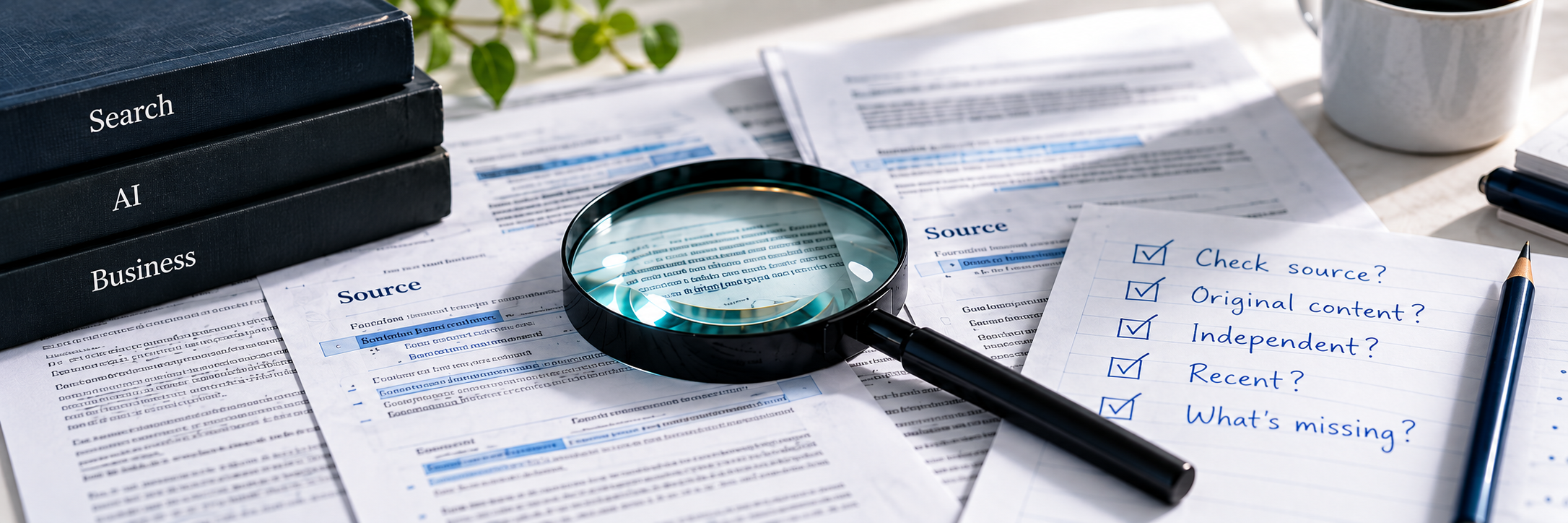
And the next time an assistant recommends a business in your area, ask it where it got that, then go read those sources yourself, because sometimes you'll find a real gap and sometimes you'll find a summary that has no idea what you actually do differently. That's the gap worth fixing. Give the AI real detail, from real customers, in more places than Google, and you've given it an actual reason to recommend you.
Sources (10)
- Amazon, Amazon improves customer reviews with generative AI, Aug 14, 2023
- Google, Gemini and Google Maps updates, Oct 31, 2024; Ask Maps, Mar 12, 2026; Maps enforcement figures, Apr 16, 2026
- Google Gemini Help, Gemini Apps and Google Maps, undated, checked Oct 30, 2026
- Yelp, 2025 Trust and Safety Report, Feb 25, 2026; Review policy, undated, checked Oct 30, 2026
- Silicon UK / Business Wire, Yelp unveils Review Insights, Dec 10, 2024
- Tripadvisor, Community Guidelines, undated, checked Oct 30, 2026
- Federal Trade Commission, Consumer Reviews and Testimonials Rule, Aug 22, 2024; warning letters, Dec 22, 2025
- OpenAI, Shopping with ChatGPT Search, undated, checked Oct 30, 2026
- Apple Maps, Attribution, undated, checked Oct 30, 2026
- Google Business Profile Help, Get more Google reviews; Maps user-contributed content policy, undated, checked Oct 30, 2026

Oliver Helgemo
Oliver Helgemo studies how AI and search decide which businesses to recommend. For the last four years he has studied what drives consumer decisions across real estate, business-to-business sales, search engine optimization and AI adoption, and he now works with local businesses on how they show up in AI answers.
More from OliverSpot an error? See how we handle corrections.